

-
POLFAR and LOFAR-ERIC
POLFAR





In 2023–2026, the POLFAR consortium carried out the first mandatory modernization of all Polish LOFAR stations (LOFAR 2.0). The modernization was undertaken through the project ‘Participation of the POLFAR consortium and the POLFARO working group in the European ILT structure for 2021–2026’, funded by the Ministry of Science and Higher Education (agreement No. 2021/WK/02).
LOFAR 2.0 modernization includes the development of both the distributed station infrastructure and the central hardware and software components. Its aim is to enhance the instrument’s scientific capabilities, maintain its unique position in the SKA era, and make the system and its data more accessible to users beyond the specialist community.
LOFAR 2.0 introduces, among other improvements:
- approximately three times greater real-time data processing capacity using the same equipment racks,
- an improved frequency and clock signal distribution system, including distribution of the central clock,
- an increase in the dynamic range of analogue-to-digital converters from 12 to 14 bits,
- an improved thermal design of the equipment,
- modernization of monitoring and control systems, including the use of TANGO and OPC-UA.
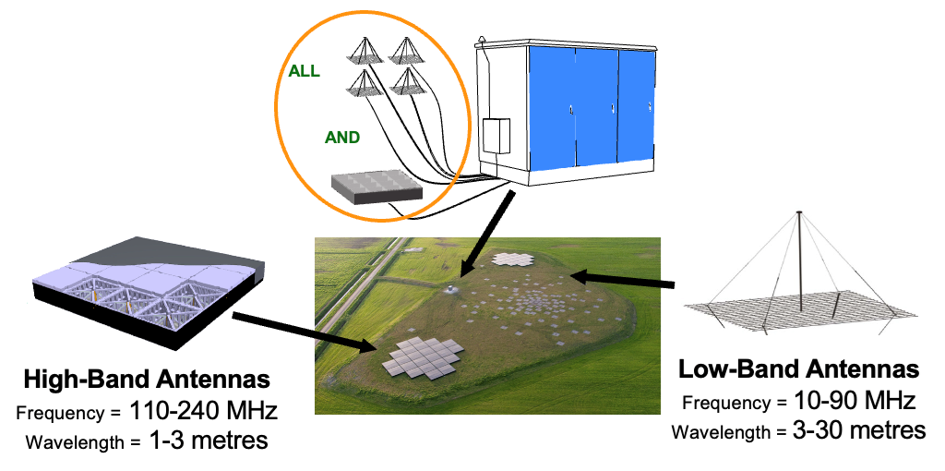
LOFAR 2.0 also enables the development of new observing capabilities. These include simultaneous observations in the LBA and HBA bands, increased LBA sensitivity, simultaneous imaging and beamformed observations, including pulsar observations, improved system linearity, and new approaches to data correlation and processing. The modernization also includes the development of a new correlator, integration with NenuFAR, and new tools for preparing observing proposals.
With its anticipated sensitivity and angular resolution, LOFAR 2.0 provides research infrastructure complementary to the SKA project, which is included in the ESFRI Roadmap and is being developed in the Southern Hemisphere, in Australia and the Republic of South Africa. Over the next decade, LOFAR will remain one of the world’s most important radio astronomical instruments operating at extremely low frequencies, particularly in the LBA band. SKA will not have comparable angular resolution capabilities in the lowest frequency range. For LOFAR, these are provided primarily by the extensive network of international stations, including the three Polish stations.
To meet the requirements of the system’s continued operation and development, the local infrastructure at the three Polish LOFAR stations was also modernized after approximately ten years of operation. As part of this work, POLFAR:
- increased the bandwidth of connections linking the three Polish LOFAR stations and the infrastructure of POLFAR members to the PIONIER and LOFAR ERIC networks to at least 100 Gbit/s,
- installed components of a precise frequency distribution system at the three Polish LOFAR stations,
- upgraded GNSS receivers, enabling measurements at rates of up to 200 Hz and real-time calculation of parameters such as the S4 index and TEC,
- upgraded the computer systems used for pulsar observations and data processing,
- installed systems for LOFAR-VLBI observations.
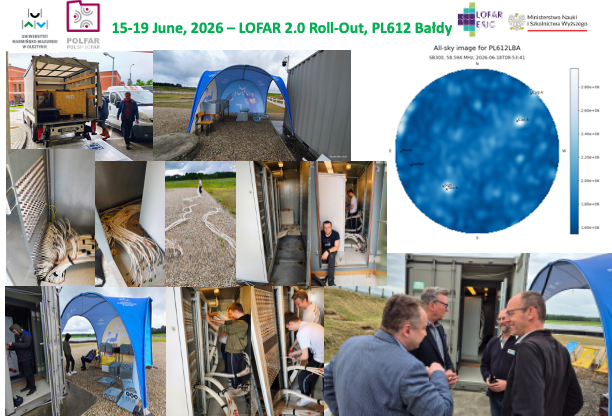
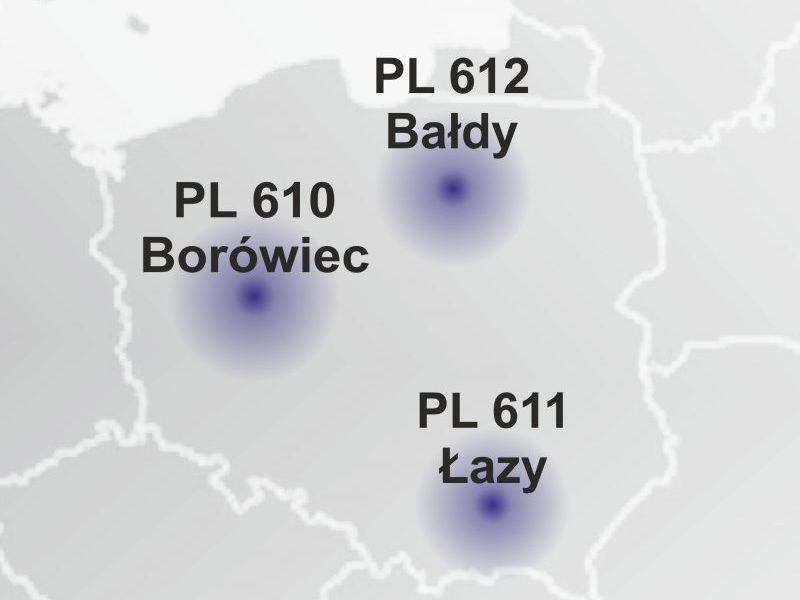
The LOFAR PL-612 station in Bałdy was the first Polish LOFAR 2.0 station to become operational, in June 2026. The PL-611 station in Łazy and the PL-610 station in Borówiec subsequently became operational in August 2026.